Category: Uncategorized

  • Why Reach for Kitchen Scissors at Korean BBQ?

    Seoul, What’s Cooking? · Wait, Why?
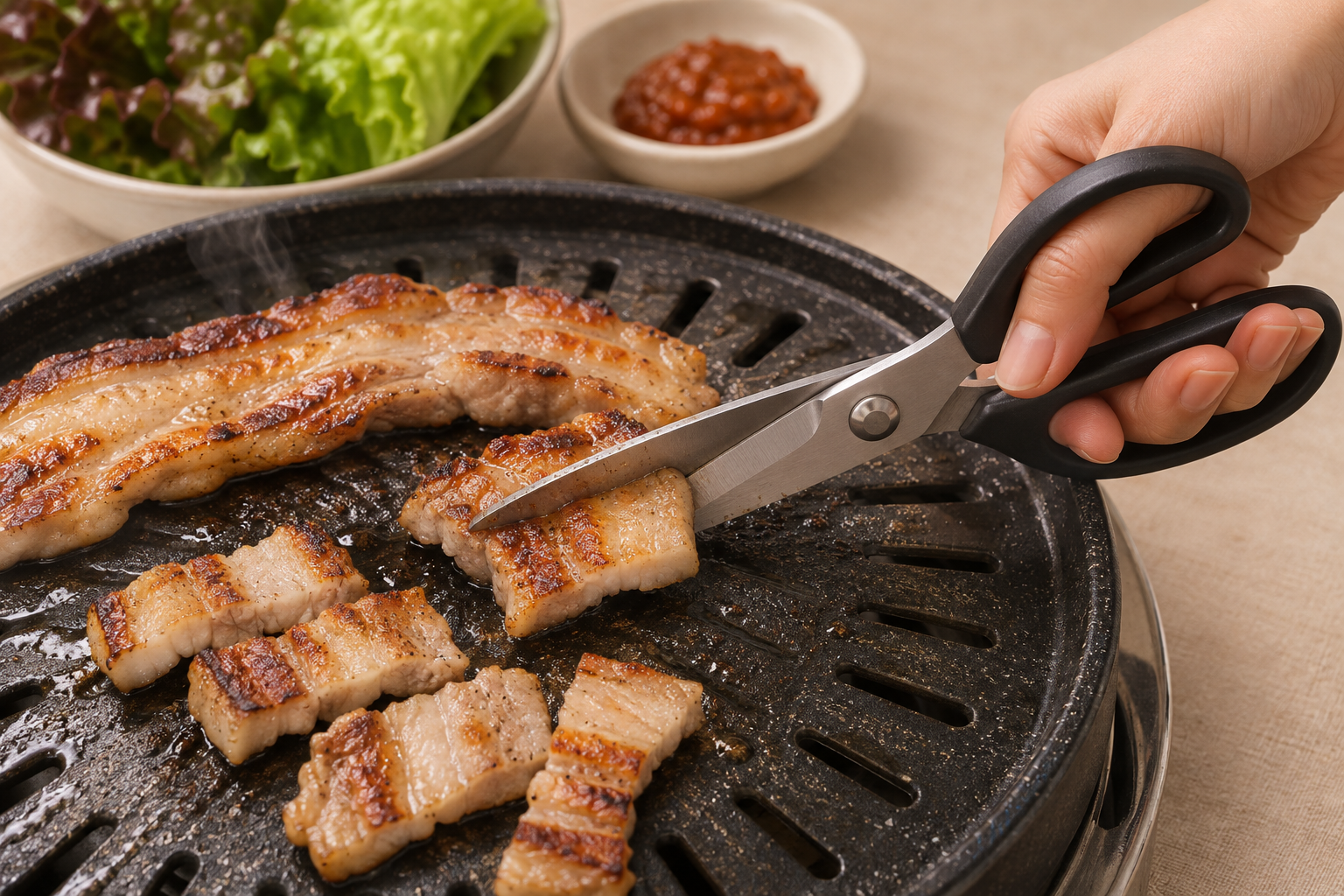
    Kitchen scissors cutting a browned strip of pork belly on a Korean tabletop grill.
    Samgyeopsal cut into bite-sized pieces on a tabletop grill.

    When a wide strip of pork belly is already on the grill, kitchen scissors give you a way to turn it into bite-sized pieces right there. In her samgyeopsal recipe, Korean Bapsang author Hyosun Ro describes doing just that with larger pieces. Think of the scissors as the last step between a strip of pork and an easy bite.

    Same pork belly, two ways to portion it

    Ro gives home cooks a choice. You can portion the pork belly before it goes on the grill, or leave it in larger pieces and snip it after cooking. The difference is when the cutting happens. If the meat is already in bite-sized pieces, there’s no cutting job left for the scissors.

    That smaller piece also makes sense when you see how Ro serves samgyeopsal, with lettuce and ssamjang for wraps. A strip that takes up much of the grill can become several bites, each small enough to tuck into a leaf with whatever you’re adding to your wrap.

    Another job for the same tool

    Maangchi uses the same idea in a different setting. Her kimchijjim recipe wraps pork in long kimchi leaves. For a buffet or potluck, she suggests offering to cut the rolls with kitchen scissors after serving them. One example happens at the grill, the other at the plate. In both, the scissors portion something that’s already where it’s going to be served.
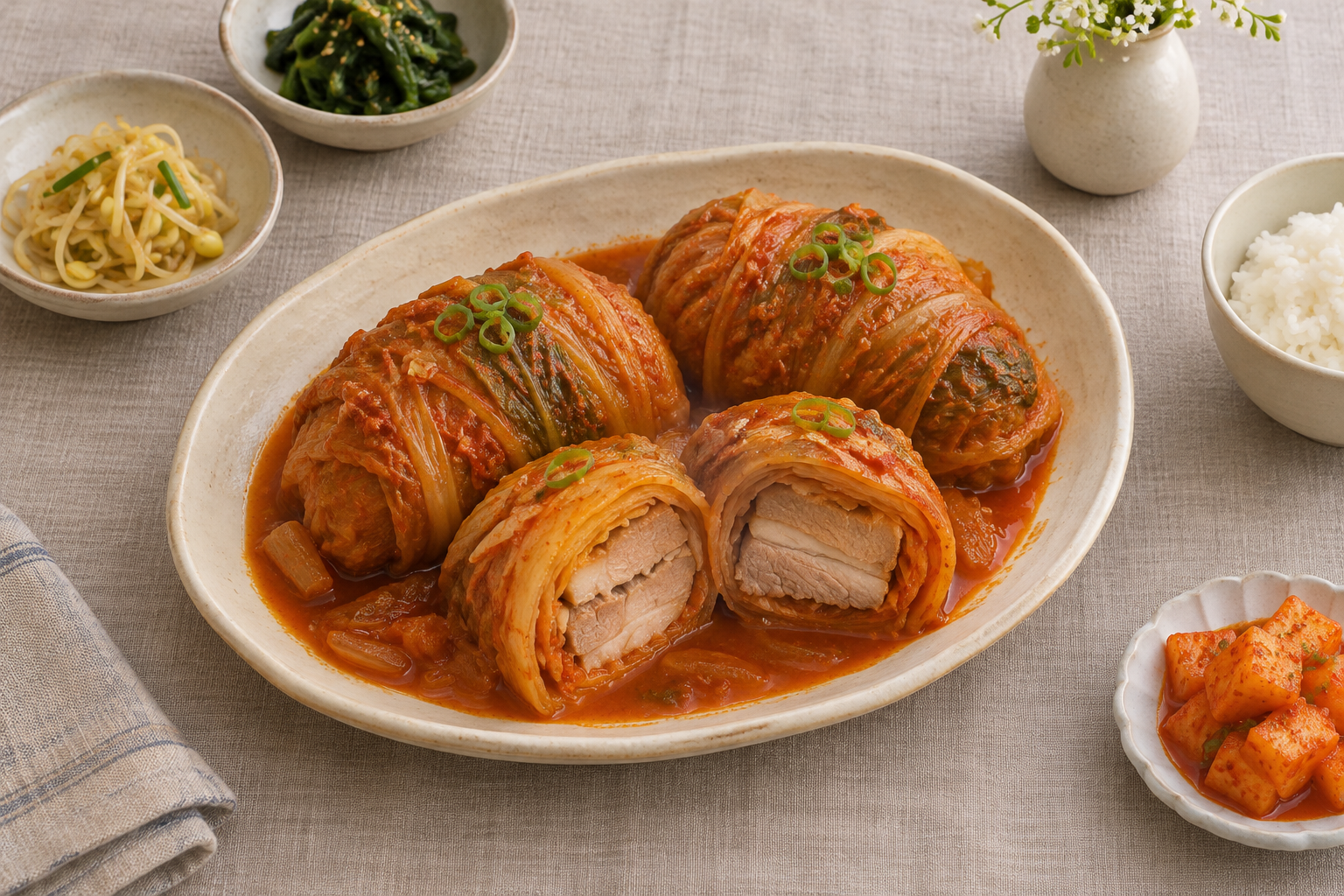
    Braised kimchi rolls arranged on a serving plate, with one cut to show the pork filling.
    Kimchijjim rolls with a pork filling.

    Quick quiz

    In Ro’s recipe, when can you use scissors if you leave the pork belly in large strips?

    1. After cooking, to divide the strips into bites
    2. Before serving, to mix the ssamjang
    3. After eating, to shape the grill pan
    Reveal the answer

    After cooking. Ro describes cutting the cooked strips into smaller pieces directly on the grill or pan.

    Images in this article were generated with AI.
  • Why Tteokbokki Calls for Two Kinds of Korean Chile

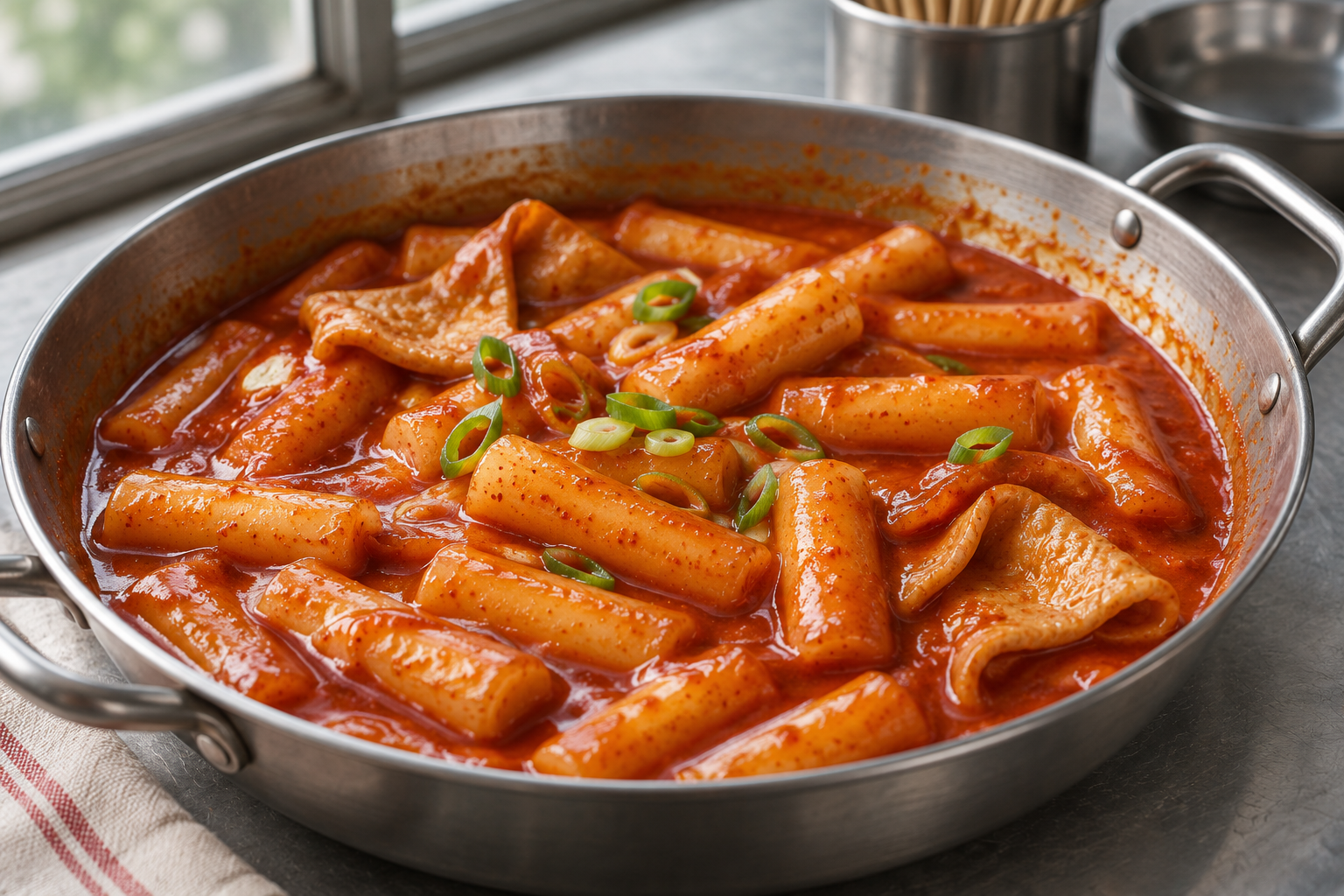
    Cylindrical rice cakes and folded fish cake coated in glossy red tteokbokki sauce

    You’re in the Korean grocery aisle with a recipe for tteokbokki (Korean rice cakes simmered in sauce) on your phone. It says to buy gochujang and gochugaru. The names look close enough that putting one back feels like a small act of efficiency. What difference can a few letters make?

    In many red tteokbokki recipes, gochujang, a thick fermented chile paste, provides the base seasoning. Gochugaru, dried ground Korean red chile, adds heat without adding another spoonful of that paste. The useful part of buying both is that you can change one without changing the other.

    Read the recipe like a shopping list with priorities

    In Sue’s tteokbokki recipe on My Korean Kitchen, the paste is measured in tablespoons and the flakes in a teaspoon. That difference tells you which ingredient is carrying more of the seasoning in this particular sauce. A spoonful of paste brings a sweet-savory fermented flavor as well as chile heat. A spoonful of flakes brings dried chile flavor and heat. Swapping the first spoon for the second changes the flavor balance along with the form of the ingredient.

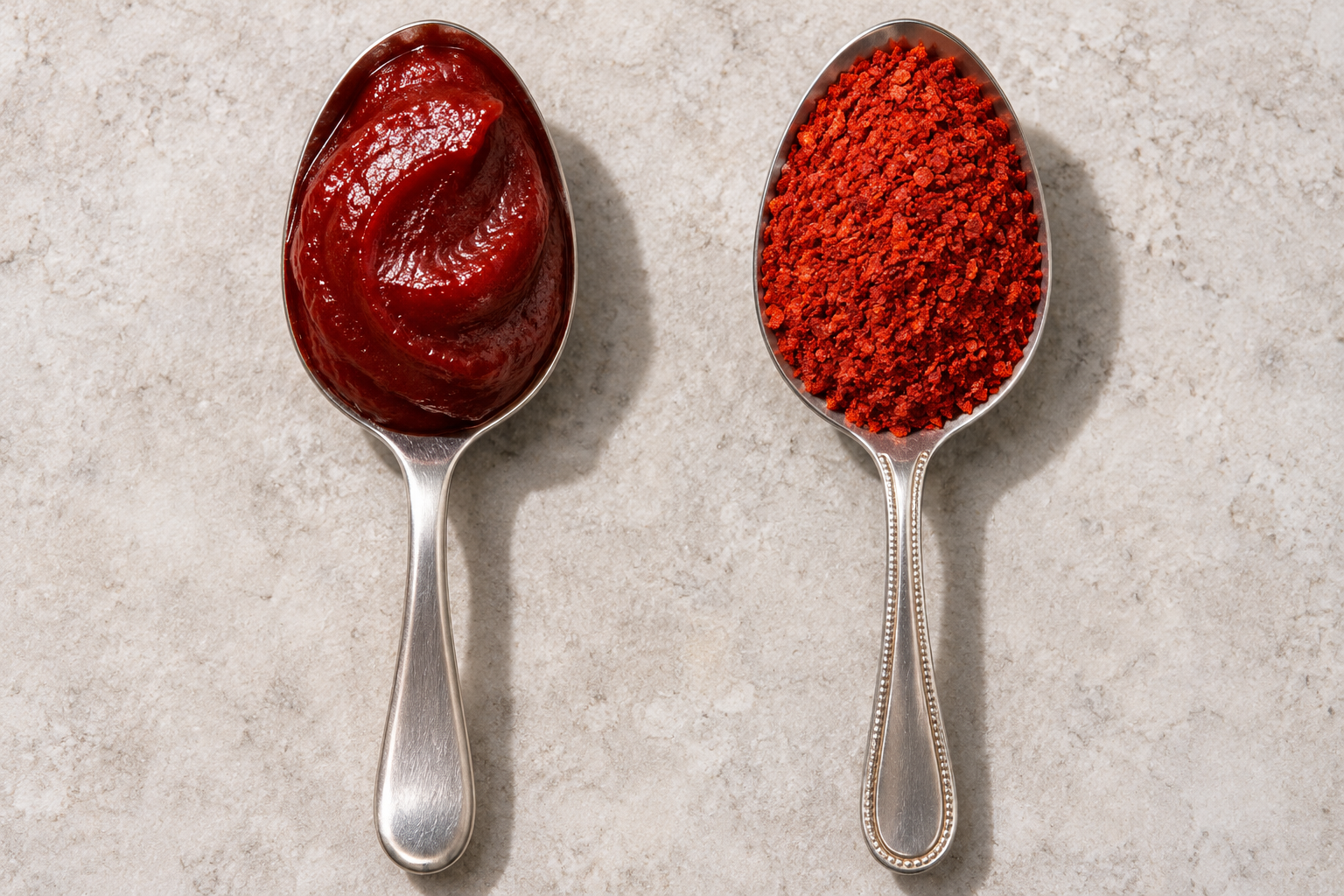
    Glossy dark-red gochujang paste beside dry red gochugaru flakes
    Gochujang on the left, gochugaru on the right.

    Which one should go in your basket?

    If you’re following a paste-based recipe and shopping for just one of the two, start with gochujang. If you already have the paste and want to turn up the heat in a recipe that uses both, reach for gochugaru. Hyosun’s tteokbokki recipe on Korean Bapsang gives a range for the flakes, so you can start at the lower end while keeping the amount of paste steady.

    Only have the flakes? Look for a recipe designed around them. In Hyosun’s soupy tteokbokki, gochugaru supplies the heat and the broth and other seasonings do the rest of the work. You get a different style of the dish and a recipe written for the ingredient you already own.

    Quick quiz

    Your sauce has the sweet-savory balance you want. You’d like a little more chile heat. Which would you reach for?

    1. Another spoonful of gochujang
    2. A small pinch of gochugaru
    3. Another splash of stock
    Show the answer

    2. A small pinch of gochugaru. It adds chile heat without adding more of the fermented paste’s seasoning.

    The images in this article were generated with AI.